
The Groom's Guide 2026: Choosing Your Wedding Suit and Formalwear
How to choose your wedding suit and formalwear
The Consiglieri Groom's Guide is a complete guide to choosing your wedding suit and formalwear. It explores classic dinner suits, modern tuxedo styling, formal suits and daytime wedding attire; choosing colour for the time of day; shirts and shoes; common mistakes; and when to begin the Custom Made / Made to Measure process.
Your wedding is one of the few occasions when your appearance needs to be impeccable, personal and memorable at once. Choosing a wedding suit involves more than colour or cut. It is a way of expressing your presence on the day.
At Consiglieri, each groom's suit, wedding suit or formal suit is created through Custom Made / Made to Measure, beginning with your measurements, proportions, personal style and the occasion. Whether your wedding is an evening Black Tie celebration, a daytime gathering in an elegant garden, a ballroom reception or an occasion with a Mediterranean atmosphere, the outfit should convey refinement, confidence and identity.
This guide is for grooms who want a wedding outfit with a personal point of view: a suit that becomes their signature.
Your style. Your signature. Custom Made.
Choose the right direction for your wedding
Before considering colour, fabric or accessories, decide on the overall style. Your wedding suit should suit the time of day, venue, dress code, season and your personality.
For an evening wedding
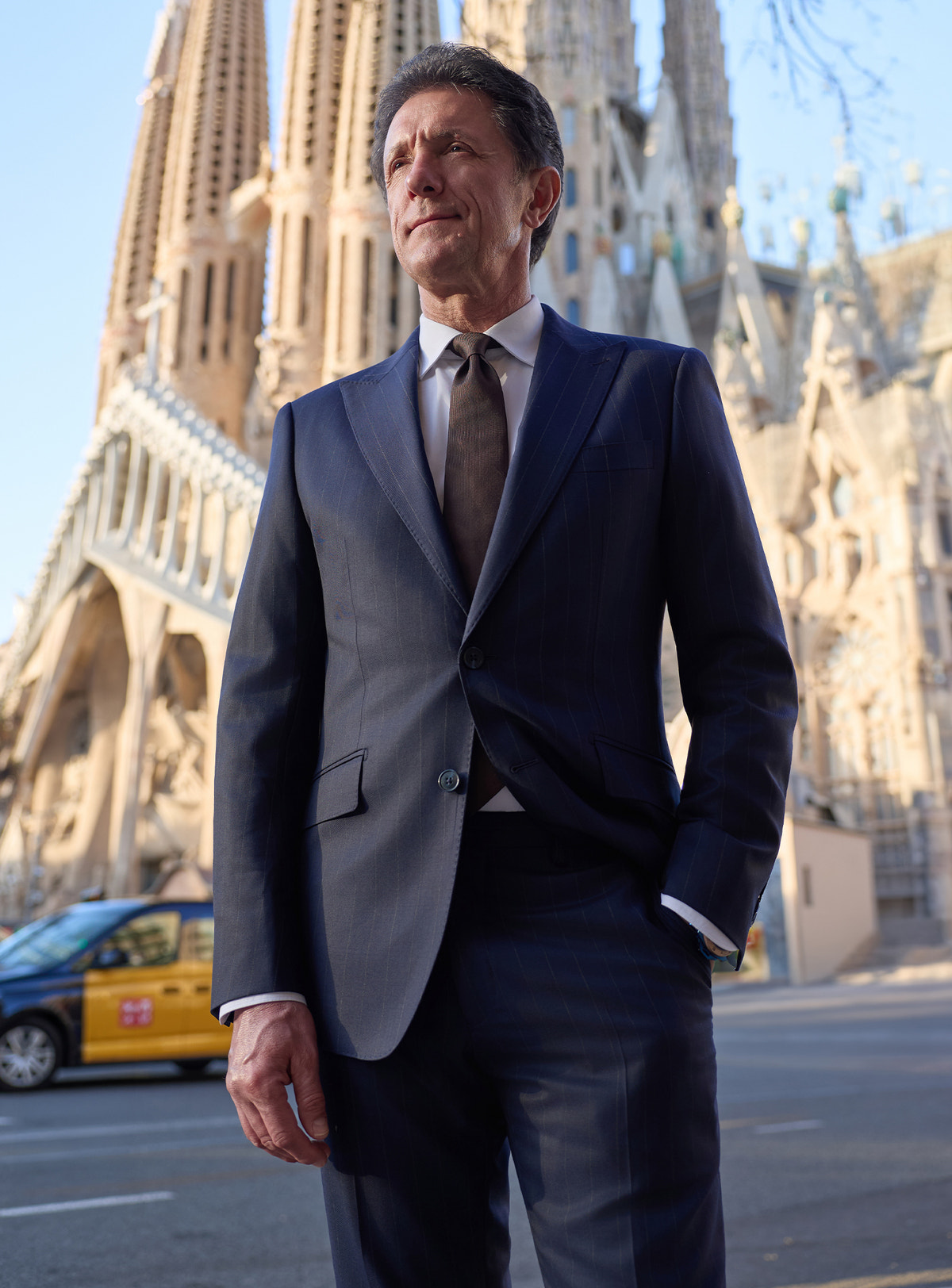
Consider formalwear with a defined structure, a precise cut and refined details. For elegant evening occasions, the main directions include:
- a classic dinner suit
- a tuxedo
- Black Tie attire
- a formal suit
- a wedding suit in a deep shade
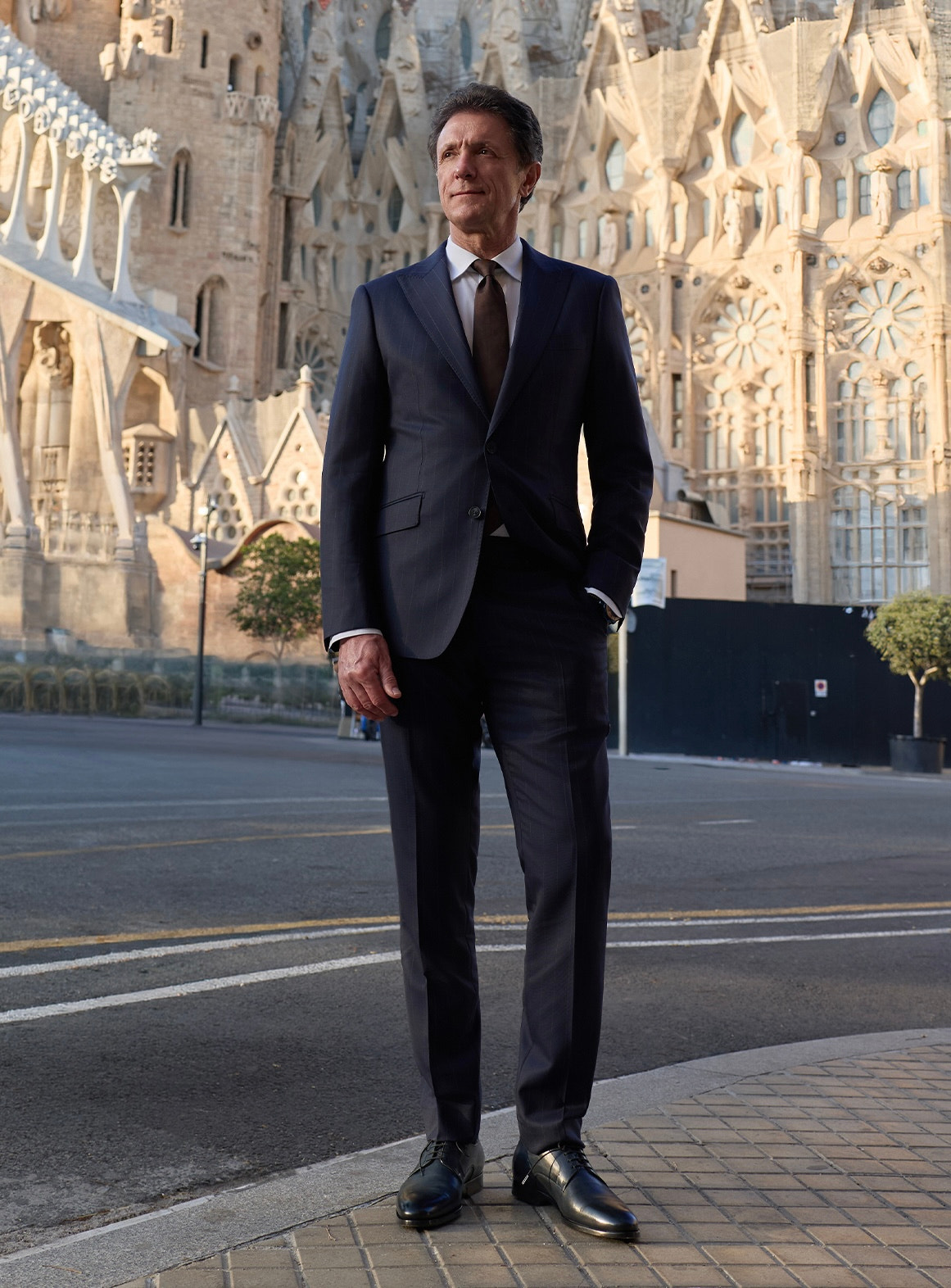
Black, deep navy, midnight blue, rich burgundy or velvet can create a memorable impression with restraint.
Explore the collection of formal suits, Black Tie and dinner suits for this direction.
For a daytime wedding
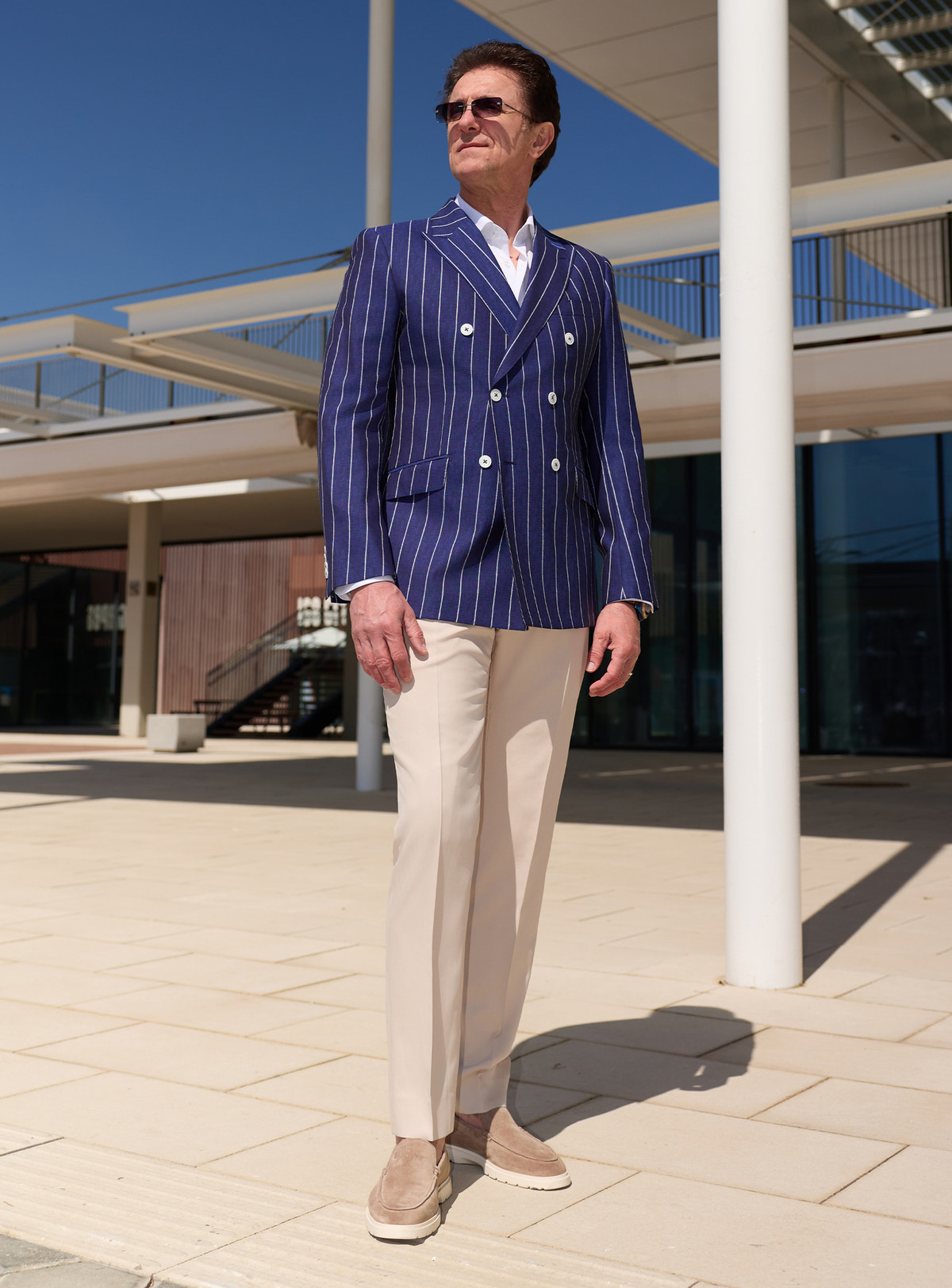
Daytime weddings, civil ceremonies, christenings, garden parties and outdoor occasions allow a lighter, more relaxed expression of elegance.
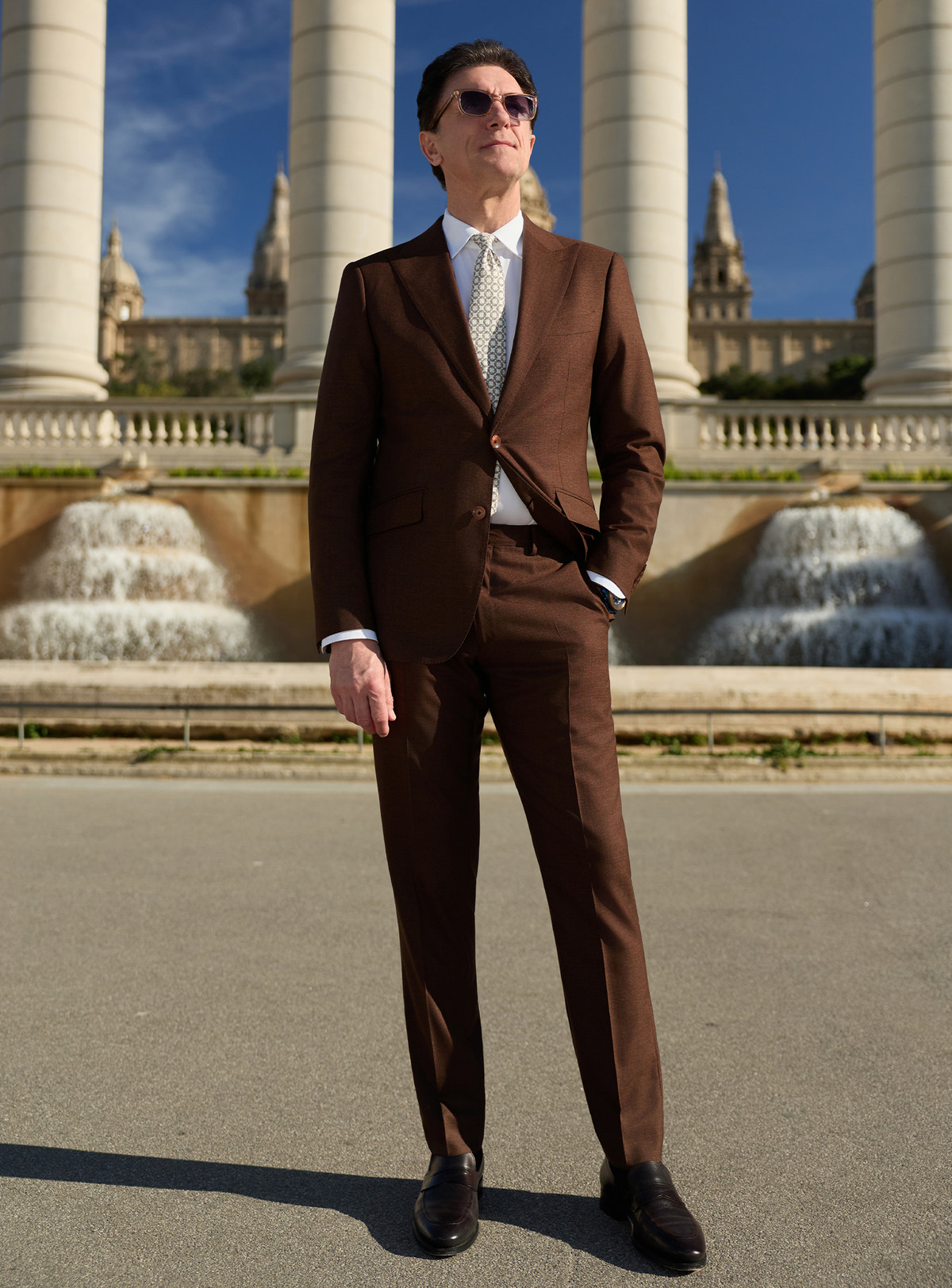
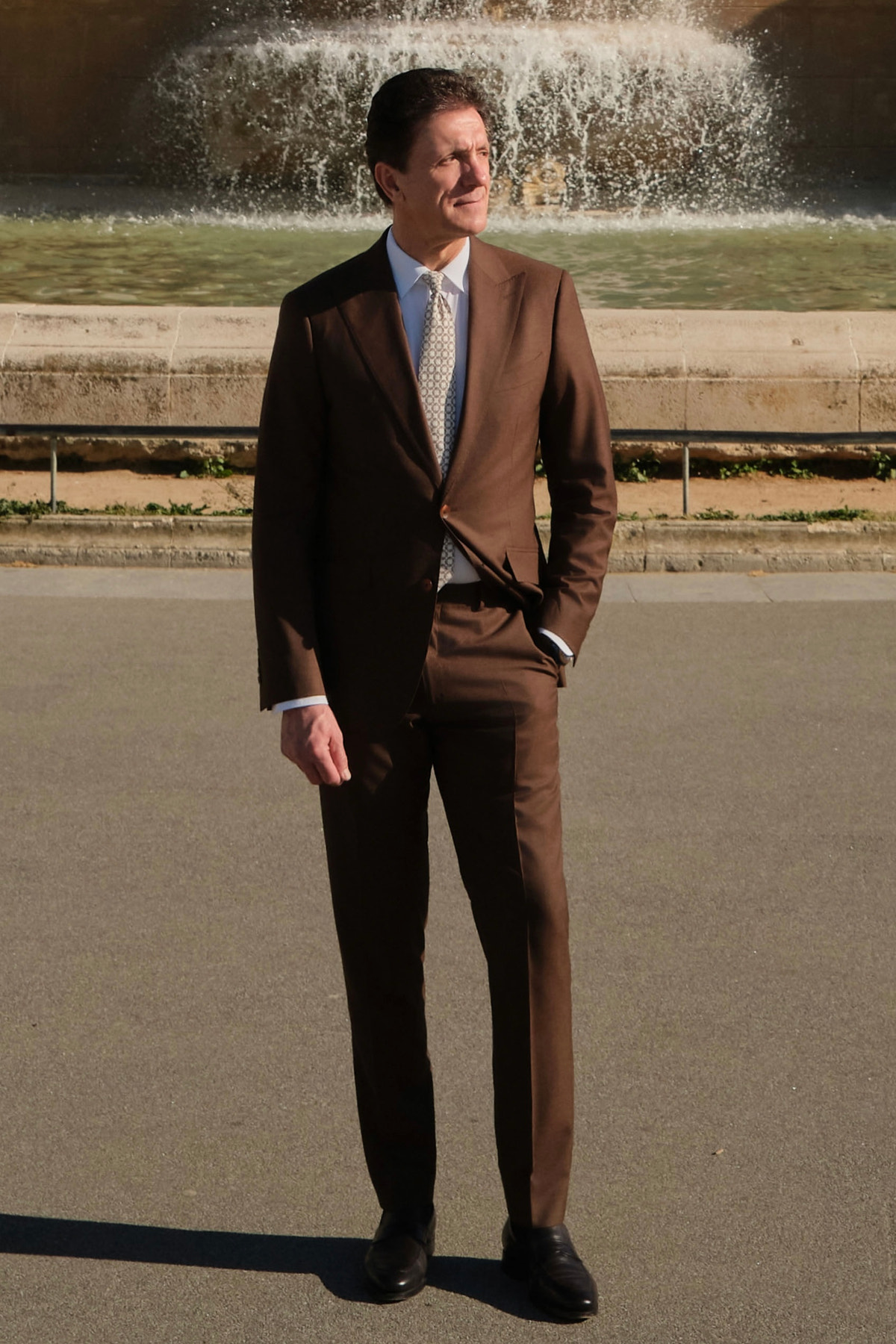
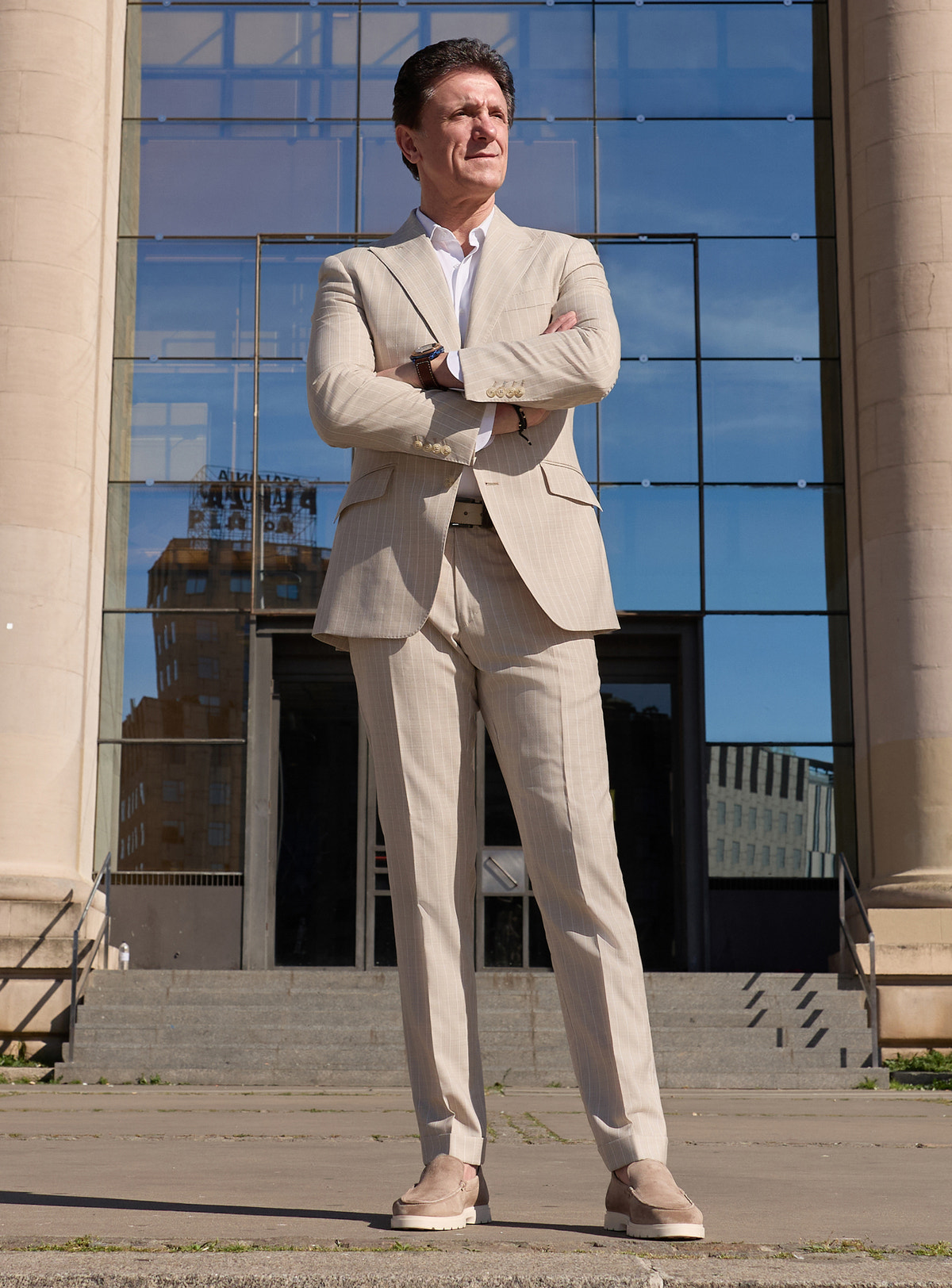
Beige, ivory, light blue, sage green, warm grey and light brown can work beautifully when selected in relation to the fabric, light and venue.
Explore the collection of suits for daytime occasions for this approach.
For a fully personalised outfit
Choose a Custom Made / Made to Measure suit developed around your proportions, rather than an off-the-rack garment altered after purchase.
The process brings fabric, cut, lapels, buttons, lining, trousers, shirt, shoes and accessories into one coherent direction.
Begin with the made-to-measure wedding suits page to explore the experience.
The groom's suit: what the outfit should express
A wedding suit needs balance. It should feel special enough to mark the occasion, with sufficient restraint to avoid appearing theatrical.
For the groom, the outfit should convey:
presence — with the attention of the occasion naturally on him;
elegance — to honour an important moment;
identity — so that the outfit reflects the wearer;
coherence — in relation to the bride, venue and dress code;
comfort — through a long, eventful day with plenty of movement.
A made-to-measure wedding suit seeks this balance through considered proportions, suitable fabrics and personalised details.
The main styles of wedding suit
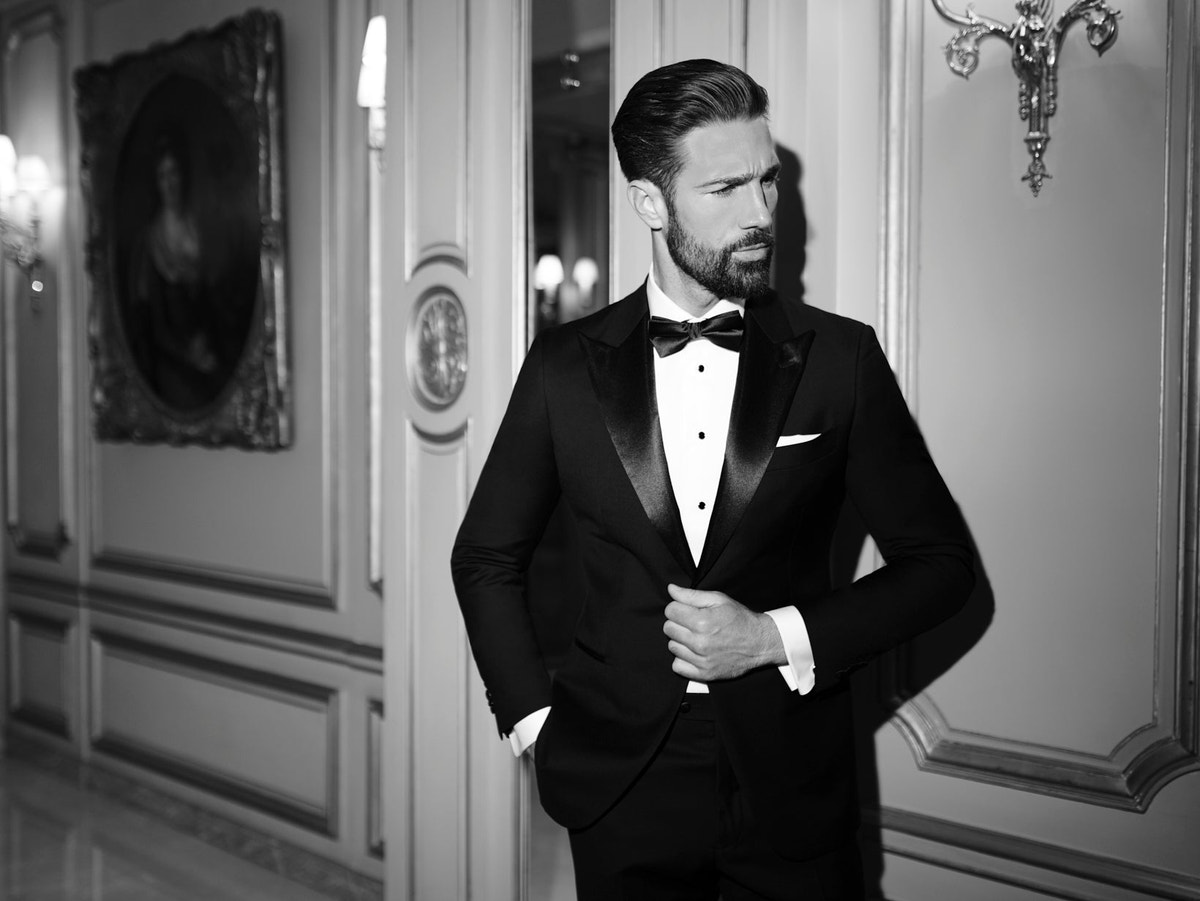
1. The classic dinner suit
A dinner suit, also known as a tuxedo, is a particularly elegant choice for a groom. It suits evening weddings, ballrooms, formal venues and occasions with a Black Tie dress code.
Its essential elements include:
- a jacket with satin-faced peaked lapels or a shawl collar;
- black trousers, usually with a side stripe;
- a white formal shirt;
- a black bow tie;
- black Oxfords or elegant polished-leather shoes;
- a discreetly worn white pocket square.
The classic dinner suit expresses a composed, timeless elegance. It is ideal for a groom seeking a strong and refined appearance.
2. A modern tuxedo interpretation
A tuxedo can also offer a more personal interpretation of eveningwear, in black, midnight blue, ivory, burgundy, deep green or velvet.
It suits a groom who wants a memorable outfit with a refined finish.
A well-considered tuxedo does not need to be ostentatious. Its character comes from proportion, fabric, lapels, drape and details.
3. The formal suit
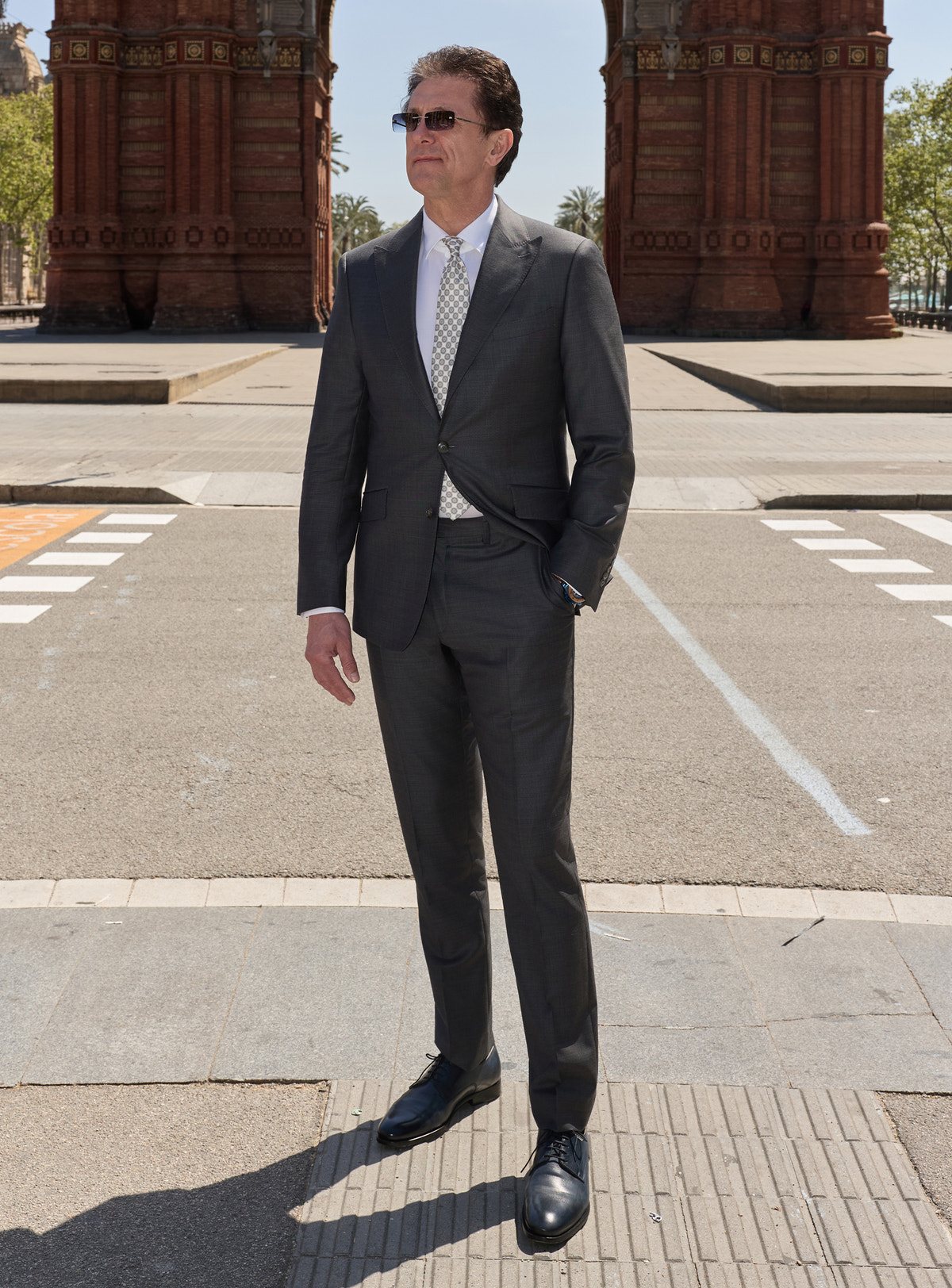
A formal suit is an excellent choice for grooms who want an elegant outfit without necessarily following Black Tie. It may be worn with a tie, a bow tie or a more personal approach, depending on the setting.
It suits:
- elegant evening weddings;
- receptions;
- formal ceremonies;
- occasions in refined venues;
- grooms who want a distinguished yet versatile outfit.
4. The daytime wedding suit
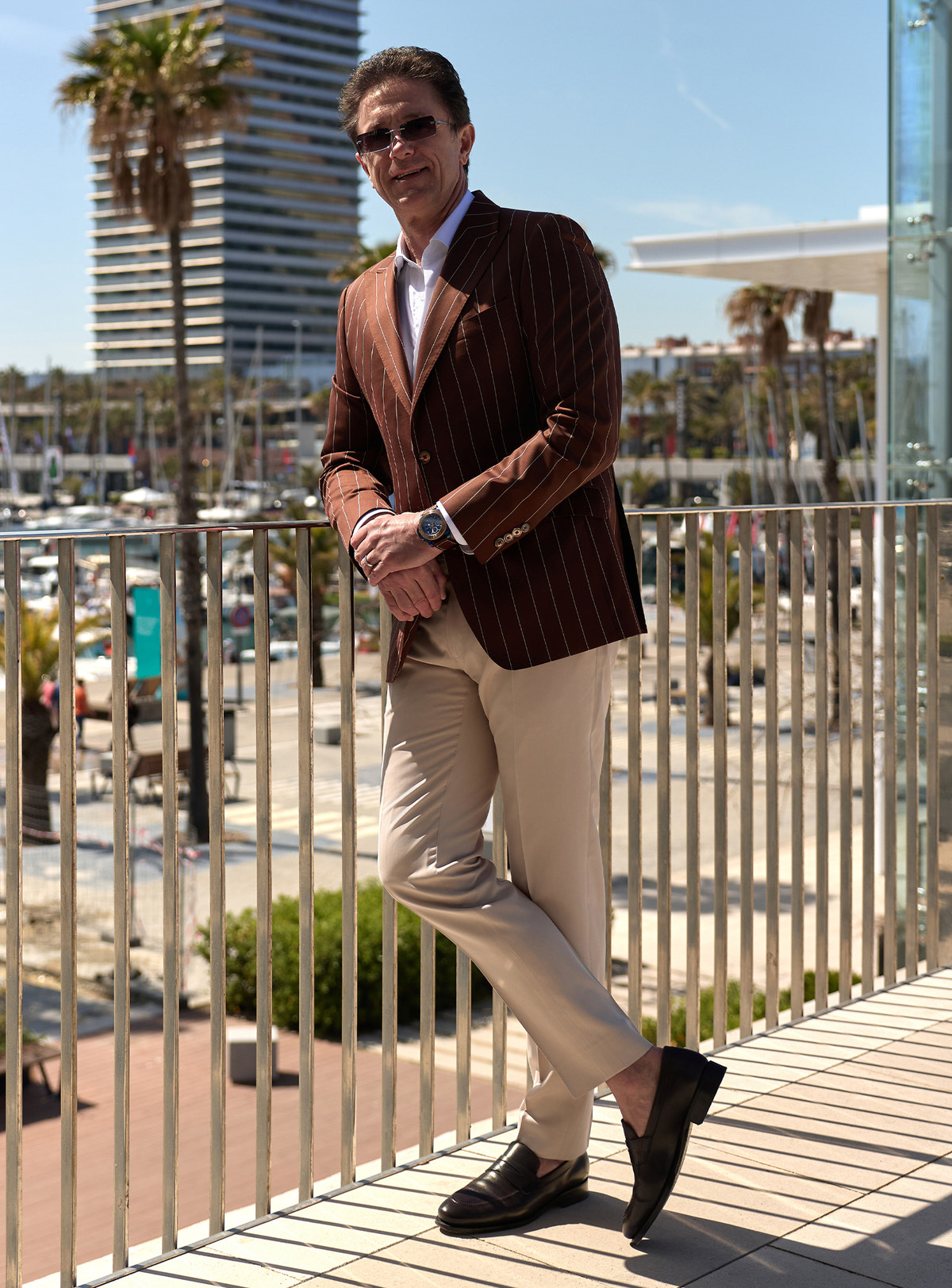
For daytime weddings, the suit should have a lighter character that sits naturally in outdoor light. Fabric is particularly important.
Consider:
- fine wool in a weight suited to the season;
- linen or linen blends for relaxed venues;
- warm, natural shades;
- an elegant cut with a softer structure;
- loafers, Oxfords or Derbys, depending on formality.
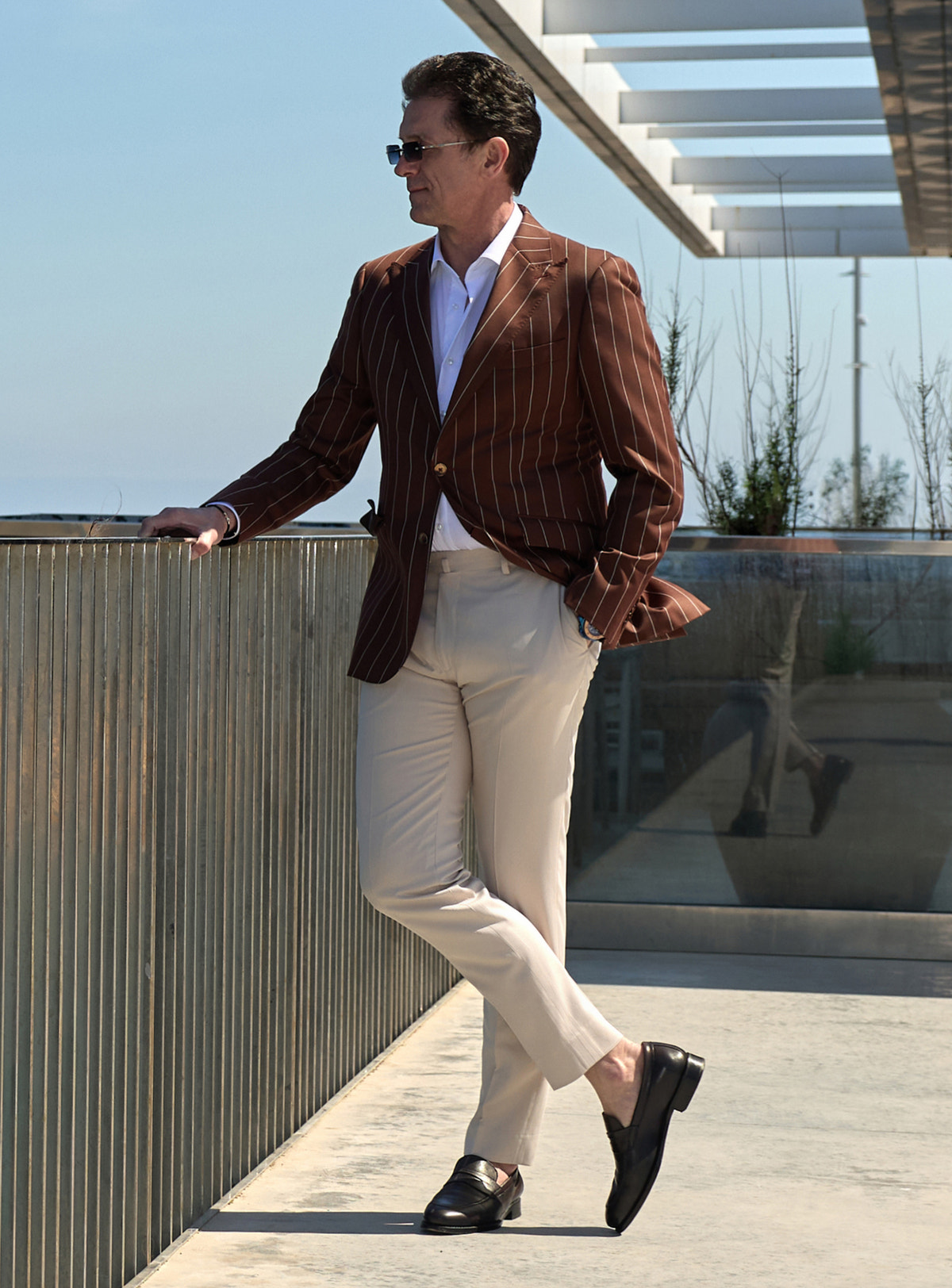
A daytime suit should feel at home in natural light. Its elegance comes from ease and proportion rather than strong contrast.
How to choose the colour of your wedding suit
Consider three things when choosing colour: the time of day, the season and the venue.
For evening weddings
Suitable choices include:
- black;
- midnight blue;
- deep navy;
- burgundy;
- dark green;
- black or navy velvet;
- an ivory dinner jacket, where the setting and dress code allow.
These shades work well in artificial light, evening photographs and formal interiors.
For daytime weddings
Suitable choices include:
- beige;
- sand;
- warm grey;
- light blue;
- sage green;
- light brown;
- ivory;
- natural tones inspired by the venue and season.
Daytime attire should feel light and comfortable, without appearing heavy, stiff or excessively formal.
For a civil ceremony
A civil ceremony allows a more relaxed approach. Consider an elegant daytime suit, a jacket with complementary trousers or a Smart Elegant outfit.
The direction should feel composed and personal, with a restrained sense of ceremony.
Fabric makes the difference
A wedding suit is judged first by the way it sits and the quality of its cloth. Fabric influences drape, comfort, warmth, the outline of the body and the way the suit appears in photographs.
For a summer wedding, look for lightness and breathability. For an autumn or winter wedding, the cloth may have greater structure, depth and weight.
At Consiglieri, fabric selection is an essential part of the Custom Made experience. In the showroom, your dedicated consultant guides you towards a cloth suited to the season, venue and formality of the occasion.
The right fabric should feel as good throughout the day as it looks.
The cut: a detail that changes everything
Even a beautiful fabric loses its impact without the right cut. Proportions are essential to a wedding suit.
The jacket should have a clean shoulder line, a balanced closure, an appropriate length and a waist that follows the silhouette comfortably. The trousers should drape cleanly, without excess fabric or tension.
For the groom, the cut should offer:
- an elegant outline;
- freedom of movement;
- a balance of comfort and structure;
- a composed appearance in photographs;
- ease throughout the occasion.
A Made to Measure or Custom Made suit begins with your measurements and the way your body moves. This allows a more personal approach to comfort, proportion and the complete outfit.
The shirt for your wedding suit
The shirt provides the foundation of the outfit and influences its entire character.
For Black Tie or a dinner suit, consider a white formal shirt with a bib or concealed placket, double cuffs and a collar suited to a bow tie.
For a classic wedding suit, white remains a reliable and elegant choice. For daytime weddings or more relaxed settings, very subtle shades of pale blue, ivory or pale pink can also work when carefully integrated into the outfit.
A made-to-measure shirt allows you to choose the collar, cuffs, buttons, fabric and personalised details. It is an important part of a considered wedding outfit.
A bow tie, a tie or an open collar?
The Consiglieri recommendation: a bow tie
A bow tie is the appropriate choice for a dinner suit and Black Tie. Black silk remains the classic option.
With or without a tie
Both approaches can work for daytime weddings, civil ceremonies or relaxed occasions, with careful attention to the complete outfit. An open collar brings a softer elegance, supported by a precise cut, an immaculate shirt and appropriate shoes.
The groom's shoes
Choose shoes according to the formality of the suit.
For Black Tie and dinner suits, black Oxfords in fine or polished leather are a dependable choice.
For classic wedding suits, Oxfords or Derbys work well. For daytime weddings, loafers or tassel loafers may be appropriate, particularly for relaxed summer celebrations and garden parties.
The guiding principle is harmony: shoes should complete the outfit without competing with it.
Accessories: fewer, more considered choices
Wedding accessories should complement the outfit while keeping it composed.
Consider:
- a pocket square;
- cufflinks;
- a bow tie or tie;
- elegant shoes;
- a belt only where it suits the trousers;
- an understated watch;
- long, elegant socks in a complementary tone.
For dinner suits and Black Tie, trousers without a belt often create a cleaner line. Side adjusters can be used to adjust the waist.
Cufflinks can subtly complement the wedding ring or other metal details. A white pocket square remains an elegant choice for eveningwear.
The groom and wedding sponsor: distinguishing the outfits
Where the groom and the wedding sponsor wear outfits of similar formality, subtle details can distinguish their roles. In Romanian, both “mire” and “ginere” refer to the groom in this context.
The groom should have the clearest visual presence through a carefully considered outfit, rather than the loudest colour or pattern.
The wedding sponsor, or naș, can dress to a similar level of formality while leaving the groom as the focus.
Close family and guests can follow the overall direction of the celebration with a more understated interpretation.
In the showroom, these distinctions can be developed through colour, lapels, accessories, fabric, cut and degree of formality.
A suggested planning timeline for your wedding suit
4–6 months before the wedding
This is an ideal time for your first showroom appointment. Establish the stylistic direction and discuss the venue, time of day, season and dress code.
3–4 months before
Select the fabric, cut, colour, details, shirt and accessories. This is when the outfit begins to take on its individual character.
6–8 weeks before
Review the fit and refine the proportions. The jacket's line, the drape of the trousers and your comfort become the priorities.
2–3 weeks before
Bring the complete outfit together: shirt, shoes, bow tie or tie, pocket square, cufflinks and final details.
In the week of the wedding
The suit should be ready, checked and stored correctly. With the choices already settled, you can wear it with confidence.
A checklist for the groom
Before your showroom appointment, consider these questions:
- Is the wedding during the day or in the evening?
- Is the venue formal, relaxed, outdoors or a ballroom?
- Is there a dress code?
- Has the bride already decided on a style direction?
- Would you prefer a dinner suit, a formal suit or an elegant daytime suit?
- Do you favour a classic outfit or more distinctive details?
- Which colours feel like you?
- Do you need a made-to-measure shirt?
- Do you have suitable shoes?
- Would you like an outfit that can be worn differently after the wedding?
These answers help your style consultant develop a precise and personal direction.
Mistakes to avoid when choosing a wedding suit
Leaving the choice too late
A wedding suit should not be left until the final weeks. A Custom Made piece needs time for consultation and fitting.
Choosing an outfit without considering the venue
A very formal dinner suit may feel stiff in a daytime garden setting. An overly relaxed suit may feel underdressed in an evening ballroom.
Too many colours
An elegant outfit does not require many contrasts. Two or three main colour families are usually enough.
Too many accessories
The groom should be memorable through his presence, with details supporting the overall impression.
Overlooking the shoes
Shoes can strengthen or compromise an outfit. Choose them alongside the suit, rather than as an afterthought.
The Consiglieri Custom Made experience
At Consiglieri, choosing a wedding suit begins with a private showroom appointment. Your dedicated consultant considers the occasion, your proportions, personal style and the impression you want to make.
The process includes:
- style consultation;
- fabric selection;
- defining the cut;
- measurements;
- detail selection;
- recommendations for shirt, shoes and accessories;
- fitting;
- bringing the complete outfit together.
The result is a suit created for you, for your occasion and for the way you want to present yourself.
A wedding suit can become a lasting expression of personal style.
Explore the dedicated collections
To create a complete outfit, explore:
- made-to-measure wedding suits
- formal suits, Black Tie and dinner suits
- suits for daytime occasions
- made-to-measure shirts
- the Custom Made concept
- request a showroom appointment
Frequently asked questions about wedding suits
When should I choose my wedding suit?
Ideally, arrange your first appointment 4–6 months before the wedding. This allows time to discuss the outfit, choose fabric, have it made, attend fittings and complete final adjustments.
Should the groom wear a suit or a dinner suit?
It depends on the time of day and the dress code. For a formal evening wedding, a dinner suit or Black Tie outfit is an excellent choice. For daytime weddings, civil ceremonies and outdoor occasions, a lighter, more relaxed wedding suit may be more appropriate.
What is a Custom Made wedding suit?
A Custom Made wedding suit is made to order around the groom's measurements, proportions and personal style. Fabric, cut, lapels, buttons, lining and details are chosen through a personalised process.
How does Made to Measure differ from a standard suit?
A standard suit is made in fixed sizes. A Made to Measure suit uses the client's measurements and is adapted to their proportions, posture and preferences, allowing a more personal fit and appearance.
Which colour should I choose for my wedding suit?
For evening weddings, consider black, midnight blue, deep navy, burgundy or dark green. For daytime occasions, beige, ivory, warm grey, light blue and natural tones can work beautifully.
Can I wear a dinner suit to my wedding?
Yes. It is a particularly elegant choice for a groom, especially for evening celebrations and weddings with a Black Tie dress code.
Is a beige or ivory wedding suit appropriate?
Yes, particularly for daytime weddings, summer celebrations, outdoor venues and relaxed ceremonies. The fabric, cut and accessories should be considered together.
Can I also have a shirt made to measure?
Yes. A made-to-measure shirt completes a wedding outfit through proportion, comfort and personalised details. For a dinner suit, consider a white formal shirt with a collar suited to a bow tie and elegant cuffs.
Which shoes should the groom wear?
Black Oxfords are an ideal choice for Black Tie and dinner suits. For daytime suits or more relaxed outfits, Oxfords, Derbys, penny loafers or tassel loafers may work, depending on the occasion.
How do I request an appointment for a wedding suit?
The experience begins with a showroom appointment, where a dedicated consultant guides your choice of suit, shirt, shoes and accessories.
Request a showroom appointment and discover the Consiglieri Custom Made experience.